Monday, 9 July 2012
Ask a local musician
Just come across this great website!
If you've ever wanted to ask a local musician a question this website might be able to help you get in touch with someone suitable...
www.musomap.com - connecting musicians!
Wednesday, 18 January 2012
Tuesday, 12 July 2011
Create or Consume
I keep saying that we should create at least as much as we consume.
Heard a talk recently about how 'to live' is to make music and it is imperative that we all create our own 'music'.
Often when I am studying an exercise I find that I make a burst of progress when I improvise around a technical or musical issue in the music.
Perhaps practicing / playing the violin should also be about creating music rather than reading / consumer other composers music.
When I write my own compositions it all seems to make a lot more sense.
When I feel a certain way and I use music to express how I feel it all seems to make a lot more sense. I cease to worry about the notes.
Anyways. perhaps it might help to improvise (within / along / above) a study and create as much sound as I would if I simply read straight from the page. It seems to work. it seems to open the mind and improve understanding.
It seems to open the mind.
If you're not sure about the music, abandon the notes and start improvising until it all starts to make sense.
E.g. instead of play a straight scale move around on the scale in a way that help analyse the key signature / hand position / string tension / bow position / mood of the key... The notes are a means to an end.
Stop reading. Stop consuming. Start writing. Start playing. Start creating.
Friday, 24 June 2011
The Gift
Music is a gift. Try to offer it whole heartedly. The audience will celebrate the music with an applause.
Thursday, 9 June 2011
Bowing Index Finger
Working at improving my bowing arm.
Some problematic issues..
- my shoulder gets tense and nervous.
- my wrist likes to sit high like a crane.
- I seem to lose flexibility and fluidity.
I've found an interesting bowing exercise that seems to help keep everything relaxed.
When practicing a study. Simply life the index finger off the bow whenever playing an upbow!? This seems to help the other fingers relax and keep the wrist in check.
It's interesting to focus on when some fingers are not required.
I think the high wrist problem occurs because I try to retain the same 'index + 2nd finger' pressure that I have when I'm playing at the tip as when I'm playing at the nut. To resolve that, when playing at the nut keep the index finger off the bow, this results in the 4th finger activating and the wrist supporting the 4th finger etc etc.
Thursday, 2 June 2011
A Gig at Government House

Had a great time performing with friends at government house to celebrate the launch of the Australian Poetry Library website. Great fun!
Deliberate Practice
So what is deliberate, or mindful practice? Deliberate practice is a systematic and highly structured activity, which is, for lack of a better word, scientific. Instead of mindless trial and error, it is an active and thoughtful process of experimentation with clear goals and hypotheses. Violinist Paul Kantor once said that the practice room should be like a laboratory, where one can freely tinker with different ideas, both musical and technical, to see what combination of ingredients produces the result you are looking for.
Few musicians take the time to stop, analyze what went wrong, why it happened, and how they can correct the error permanently.
Few musicians take the time to stop, analyze what went wrong, why it happened, and how they can correct the error permanently.
Mindless Practice
Have you ever listened to someone practice? Have you ever listened to yourself practice, for that matter? Tape yourself practicing for an hour, take a walk through the practice room area at school and eavesdrop on your fellow students, or ask your students to pretend they are at home and watch them practice during a lesson. What do you notice?
You’ll notice that the majority of folks practice rather mindlessly, either engaging in mere repetition (“practice this passage 10 times” or “practice this piece for 30 minutes”) or practicing on autopilot (that’s when we play through the piece until we hear something we don’t like, stop, repeat the passage again until it sounds better, and resume playing through the piece until we hear the next thing we aren’t satisfied with, at which point we begin this whole process over again).
You’ll notice that the majority of folks practice rather mindlessly, either engaging in mere repetition (“practice this passage 10 times” or “practice this piece for 30 minutes”) or practicing on autopilot (that’s when we play through the piece until we hear something we don’t like, stop, repeat the passage again until it sounds better, and resume playing through the piece until we hear the next thing we aren’t satisfied with, at which point we begin this whole process over again).
Bullet Proof Musician
Violinist Nathan Milstein is said to have once asked his teacher Leopold Auer how many hours a day he should be practicing. “If you practice with your fingers, no amount is enough,” was Auer’s response. “If you practice with your head, two hours is plenty.”
http://www.bulletproofmusician.com/how-many-hours-a-day-should-you-practice/
http://www.bulletproofmusician.com/how-many-hours-a-day-should-you-practice/
Thursday, 26 May 2011
A Performance at Government House
Had a string quartet gig at govt house last night. The Australian poetry library launched their website!!!!
It was awesome. We did all the standards.
Issues:
- Outside gigs are super lamo.
- Playing through the programme with the cello is important.
- Listening to a few recordings simplifies things.
- Experience helps.
In general, the first violin needs perform like a solos and bring confidence to the others.
Sunday, 22 May 2011
A Gift
Interestingly...
Some people simply don't 'have' music and also, music can actually be given to another as a gift.
The ability to create music is exceptional.
Sunday, 15 May 2011
Free Quartet Music
http://www.hindson.com.au/wordpress/free/string-quartet-albums-available-for-download/
Sunday, 1 May 2011
Singing

From watching the Glen Gould doco I found something interesting whilst playing this evening.
If you play through music sometimes there can seem to be a slight disconnect. It's as though the music is written and there is a process between reading it and performing it that seems to be held back some how.... << bad explanation of a very subtle idea.
Perhaps this is a better approach. I've always been jealous of people that can perform by memory. When I do play from memory the music seem to be generated like a song in which I actually follow the rise and fall of the melody etc. Sometimes whilst reading sheet music that gets lost and it end up being 'one note after another'.
Today I tried something different.
Sing a section and comprehend it. Then play it. I found that it felt like I was playing it by memory. It's as though singing activates that part of the brain that takes ownership of the melody. When I played the music back after singing it (whilst reading the music) it felt like I was playing it by memory. It felt as though I was trying to play the music I was singing / reading.
It felt great
- much more musical.
- faster and easier.
- better comprehension.
- clearer perspective of what the purpose of a given set of notes was in the context of the phrase.
- magic magic magic.
I sing like Glenn Gould does... Horrible mumbles.
It was magical to hear how much better my violin playing is that my singing or anything else.
It was nice to hear how different my vocal sounds is to my violin sound.
It was nice to hear the different sounds and explore the 'idea' of the music without having to worry about actually playing the violin.
It was nice to read the music and use my brain without having to worry about the technically of holding and playing the violin.
There is no such thing as technical difficult. Just a lack of musical comprehension.
"We do not play the piano with our fingers but with our mind." (Glenn Gould)
After singing and comprehending the music the technique become a non issue!? My brain new what was expected and so my body was prepared for those longer shifts / accidents etc.
http://en.wikipedia.org/wiki/Glenn_Gould#Eccentricities
Gould is widely known for his unusual habits. He usually hummed while he played the piano, and his recording engineers had mixed results in how successfully they were able to exclude his voice from recordings. Gould claimed that his singing was subconscious and increased proportionately with the inability of the piano in question to realize the music as he intended. It is likely that this habit originated in Gould's having been taught by his mother to "sing everything that he played", as Kevin Bazzana puts it. This became "an unbreakable (and notorious) habit".[51] Some of Gould's recordings were severely criticised because of the background "vocalise". For example, a reviewer of his 1981 re-recording of the Goldberg Variations opined that many listeners would "find the groans and croons intolerable".[52]
Glenn Gould
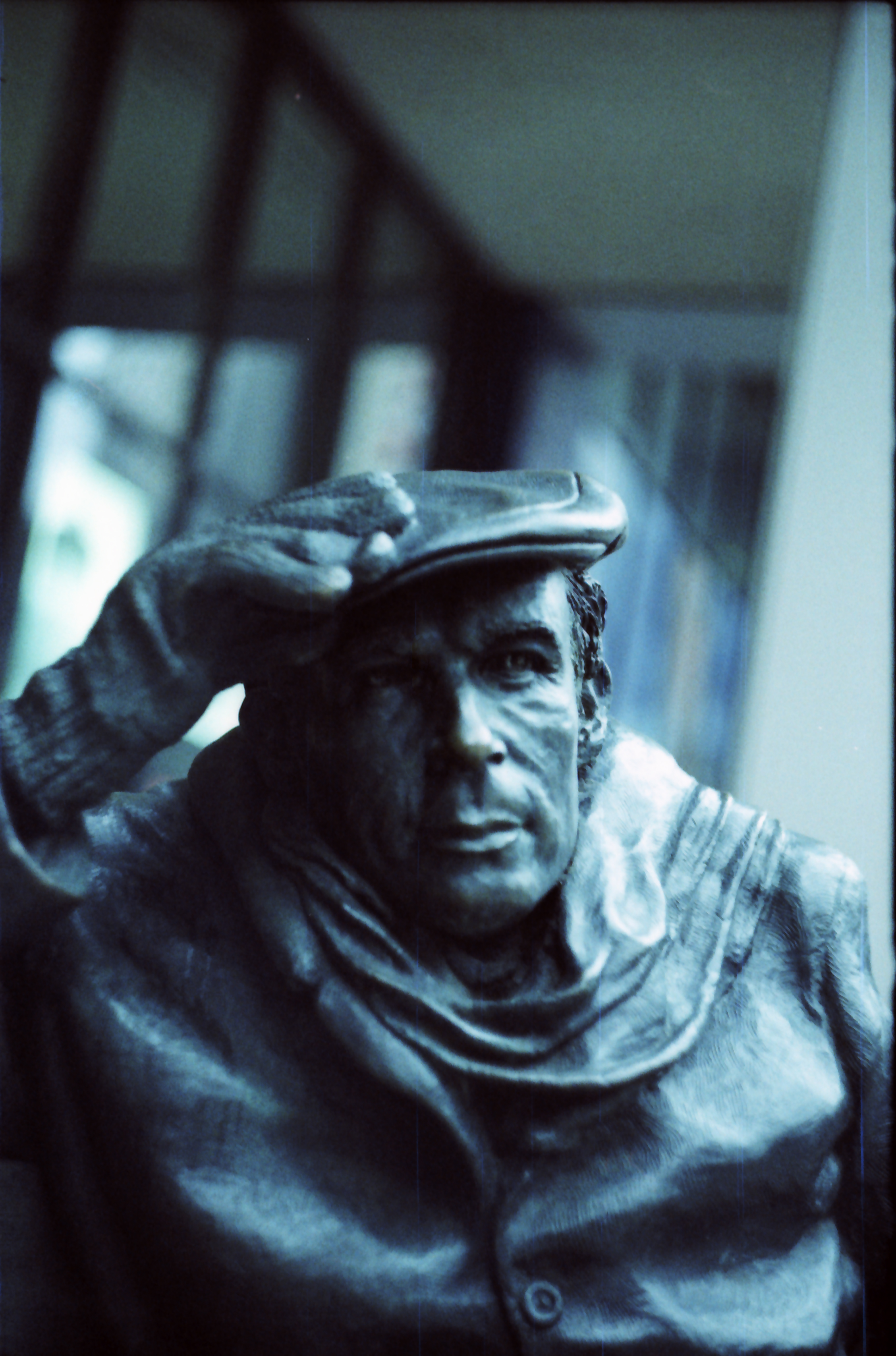
This weekend I watch Glenn Gould: Inner Genius the documentary and it was amazing. A true musican genius. A renaissance man. Right now I feel as though he is the great musician the world has ever seen.
http://en.wikipedia.org/wiki/Glenn_Gould
I want to listen to his records above anything else right now.
I'll post about the way he sings when he plays next..
Pekka Kuusisto

http://en.wikipedia.org/wiki/Pekka_Kuusisto
I saw Pekka perform with his Piano's colleague at the Musica Viva concert on the weekend and he completely inspired me.
He's the sort of player that makes you want to get up on stage with him and start playing.
He's the most comfortable and expressive musician i've seen in years.
He owns / composes / experiences / lives the music when he plays. I love it.
Wednesday, 30 March 2011
Contagious
Nervous energy is contagious. Try not to emit it and do your best not to let the nerves of others put you off.
Monday, 28 March 2011
The Left
I've found that if I play with my torso leaning more towards the left... I am more relaxed.
For some reason my left shoulder likes to go 'up' and forwards when I start to feel pressured.
If I do my best to ensure my shoulders are broad and level. And have the violin out to the left slightly it also helps my bow arm with a little more room and a more comfortable resting place on the string.
Forwards and right and closed causes me problems.
Open, broad, vertical, slightly left (especially with lots of long bows) seems to help with creating a regular loud sound.
Also. I forgot how import the idea of 'stroking' the cat is... The change of bow stroke begins slightly before the bow actually changes string. Like painting a fence with slow fertical strokes.... the brush contines upwards at the top even through the wrist has begun to flex and move downwards.
The wrist should start moving in the right direction before the bow or fingers pick up on the change (for a slow constant fluent sound).
Retaining a 'crow like' angular wrist hovering high in the sky is problematic.
The Minutia
To be an artist is to take pleasure in the detail.
The best drawings are those which are meticulous. Focusing on each stroke and enjoying the slow and detailed process is the entire story. The creative idea can take a few minutes but the creation of the art work is pain staking and full of minutia.
For those who are always focused on the big picture, violin just ain't going to be easy.
Getting lazy, or aiming for the 'overall idea' or having a casual go at art just doesn't work. Playing a beautiful melody and followed by a lazy note destroys the entire melody. The details on everything must be retained.
Somehow this relates to the idea of a performance being make up of a number of blocks arranged in a way that captures the imagination of the audience.
There is a physical repetition to being an artist.
There is no room to get lazy.
A constant and concerted effort to capture the detail of a performance results in a stress free believable experience.
Understanding music is easy. Enjoying the emotion of music is easy. Perhaps imagining a musical idea can come in a flash. Performing requires a reliable and refined constant and passionate appreciation for detail.
Touch. Fingers. Sound. Strings. Metal. Wood. Hair. Finger nails. Skin. Eyes. Arms. Vibration. Acoustics. Intonation.
When you're at the beach you can focus on the horizon or you can close your eyes and feel the sand in between your toes.
Music is created to convince an audience. It is series of ideas that lead the audience to expect some sort of resolution. Getting lazy and being sloppy with the details shows up in the audience's mind like huge walls they have to try to ignore.
Friday, 25 March 2011
Good, not lucky
If a perform us a collection of simple elements, then...
To be given, or even asked to perform should be a celebration of one's ability. It should not be a chance for the performer to some how fluke a Stella performance.
Aim to perform well, rather than excellent.
Accept that you ability is reflective of your normal playing, not your best playing.
Try to be the best man for the job.
Competition should encourage preparation and study.
Momentum
It's interesting how any given performance has a momentum.
There is a certain pace that is expected by the audience that is not present when rehearsing alone.
My stress seems to stem from this sense of immediacy and inevitability.
To perform is to embrace the idea that 'the show must go on' and that the curve of the experience for the performer should remain constant.
Subscribe to:
Posts (Atom)